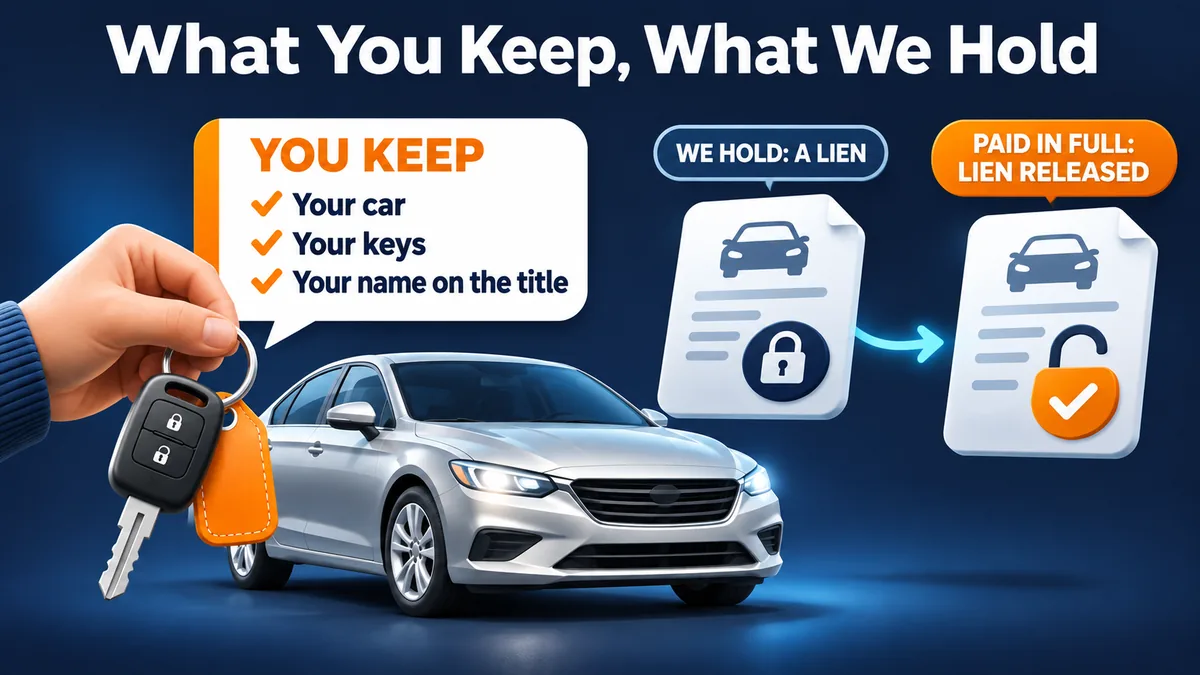
A car title loan lets you borrow money against your car while you keep driving it. It is a secured loan: the car backs the loan, and we hold only the title, through a lien, until the loan is paid in full.
A title loan from Swift Title Loans may be an option when an unexpected expense can’t wait, especially if bad credit has made it harder to qualify for a bank loan. It lets you borrow without selling your car.
To apply, the title needs to be in your name, with the car paid off or nearly paid off. We also look at your car’s value and your income to make sure the payments fit your ability to repay.
If you fall behind on payments, your car may be repossessed under your state’s law. Borrow only what you need and what you can reasonably afford to repay on time.
Quick Answers
- What is a car title loan? A secured loan that uses your car as collateral while you keep driving it.
- Do you keep your car with a title loan? Yes, as long as you stay current on the loan. We hold only the title.
- How much can you borrow on a car title loan? Within your state’s law, about 25% to 50% of your vehicle’s value, depending on your income.
- What is the main risk of a car title loan? It can cost more than a bank or credit union loan, and missed payments may lead to repossession.
What Is a Car Title Loan?
A car title loan is a secured loan backed by your vehicle’s title, the document that proves you own the car. Unlike an auto loan, which helps you buy a car, a title loan lets you borrow against a vehicle you already own.
Car title loans and auto title loans mean the same thing: a loan that uses your car as collateral. In Georgia, these loans are called title pawns because they are regulated under the state’s pawn laws.
What Do You Keep, and What Do We Hold?

Until the loan is paid in full, we hold a lien on your vehicle title. While the loan is open, you keep:
- Your vehicle. You can continue driving it as usual while your loan is current.
- Your name on the title. You remain the vehicle owner. We record our lien with your state.
- Your keys. We do not require a spare key.
- The right to pay early. We do not charge a prepayment penalty. Paying extra or paying off the loan early may reduce the total interest you pay.
When Does the Lien Come Off?
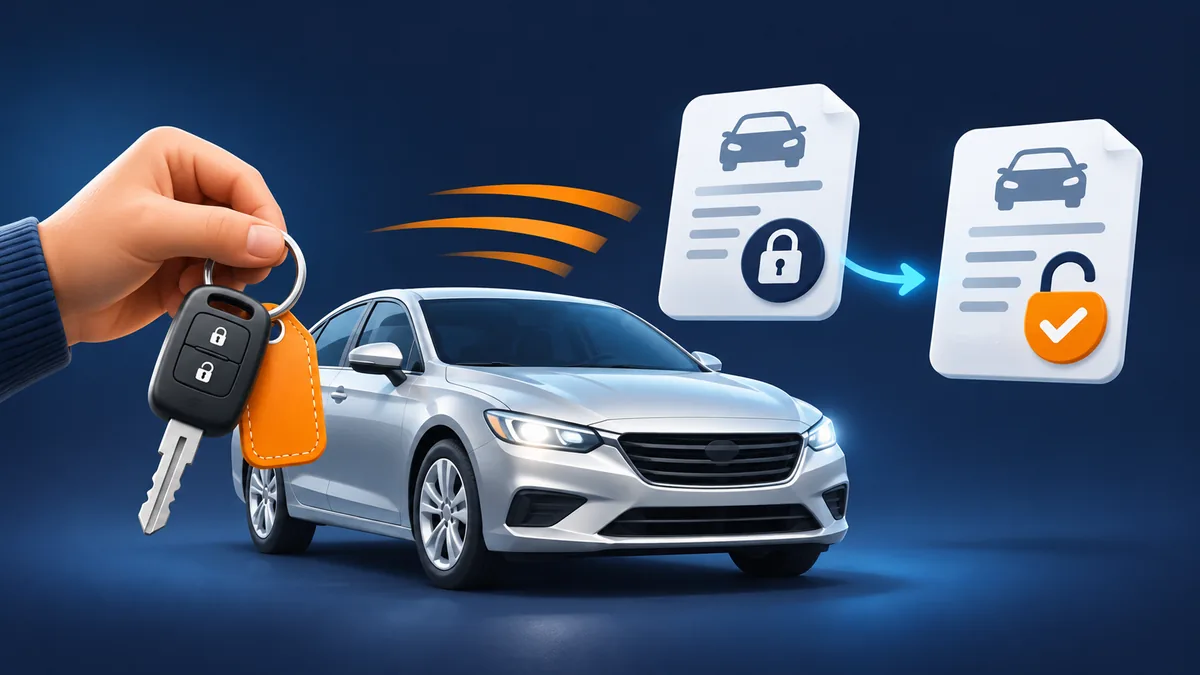
Your final payment brings your loan balance to zero. We allow the payment to clear, which generally takes about 7 to 10 business days.
Once it clears, we release our lien. In states that use an Electronic Lien and Title system, the release may be sent electronically to the state.
Your state then updates its title record and handles the title according to its process. Depending on the state, you may receive a clear title or need to request one.
Which Vehicles Can You Use?
Besides cars, we may also make title loans on:
- Trucks for personal use
- Motorcycles, through our motorcycle title loans
- RVs, through our RV title loans
Availability depends on your state and the vehicle.
How Much Can You Borrow?
Some states limit how much you can borrow. Tennessee and Virginia, for example, limit title loans to $2,500. In Tennessee, that limit applies to the total borrowed against a single vehicle title.
Within your state’s rules, our title loans are typically about 25% to 50% of your vehicle’s value. If your car is worth $10,000, that could mean roughly $2,500 to $5,000.
Your exact amount depends on your vehicle’s value, your income, and your ability to repay. Use our car title loan calculator to estimate an amount and payment before you apply.
Pricing also varies by state. Some states, such as Florida, cap the rate, while others, such as Texas, set no cap. See our title loan laws by state for the rules where you live.
What Have Our Customers Typically Borrowed?
Most title loans we funded fall in these ranges. These are examples from our lending data, not a promise of what you will receive:
- California: about $2,800 to $6,000 since 2024
- Florida: about $800 to $3,100 since 2024
- Texas: about $600 to $2,200 since mid-2025
Is a Car Title Loan a Good Idea?
A car title loan may make sense if you need money, the payment fits your budget, and lower-cost options are not available to you. It should not necessarily be your first choice, because title loans usually cost more than small loans from banks or credit unions.
Your exact rate depends on your vehicle, loan amount, and term, so it’s worth learning how to get a lower-interest title loan before you apply.
Before you sign, review the APR, monthly payment, loan term, and total amount you will repay. Every fee is listed in your loan agreement.
A lower monthly payment does not always mean a cheaper loan. A longer term may lower the payment but increase the total amount you repay.
If you fall behind, your vehicle may be repossessed under your state’s law. If you think you may miss a payment, contact us before your due date. Depending on your loan and state law, payment options may be available.
What Can You Try First?
If you have time to compare, these options may cost less:
- Bank or credit union loan. Ask about a small personal or secured loan.
- Payment plan. Ask the company you owe whether you can spread the bill over several payments.
- Family or friends. A personal loan may cost little or no interest, but put the repayment terms in writing.
Bad credit does not always rule out these options. You can also review other borrowing options for bad credit before using your car as collateral.
Where Can You Go Next?
- Apply online with no store visit in most cases
- Visit one of our locations
- See how our title loan process works
- Check what documents you need
- See whether title loans go on your credit report
Applying does not affect your FICO® Score.
Frequently Asked Questions
Are Car Title Loans Hard to Get?
You may qualify if the title is in your name, your vehicle has enough value, and you can show income to repay the loan, which can include benefits. Approval is not guaranteed.
Can You Get a Title Loan If You Still Owe on the Car?
Sometimes. If only a small balance remains, we may be able to pay off the existing lien as part of the new loan. Learn more about getting a title loan while you’re still paying off your car.
Can You Get One If the Title Is Not in Your Name?
Usually not. The title generally needs to be in your name and match your ID before you can get a title loan. If that isn’t practical, the titled owner may be able to apply with you, one of the options when the title isn’t in your name.
Can You Sell the Car During the Loan?
Yes, but the title loan generally must be paid off and our lien released as part of the sale before the title can transfer to the buyer. We do not charge a prepayment penalty for paying it off early.
Is a Car Title Loan Legal in Every State?
No. Title loan laws vary by state, and some states do not allow them. See the states we serve and our title loan laws by state for the rules where you live.
If a title loan fits your needs, you can apply online to see if you pre-qualify and get a free estimate, with no obligation to accept it.